Art Dealer Introduced Impressionism to Germany
Crowds Line Up to See Cassirer's Favorite Artists
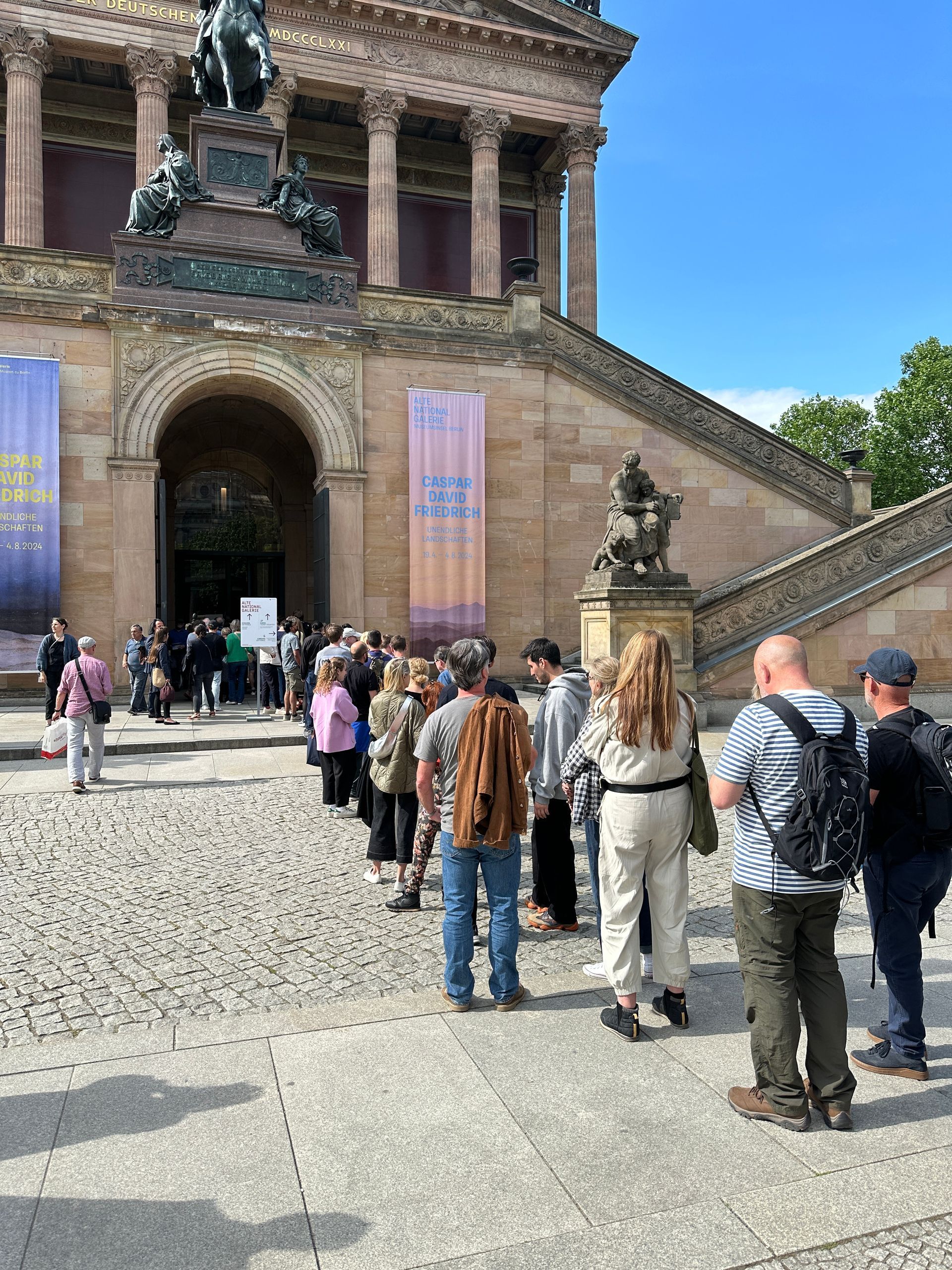
Last weekend, Mike and I went to the Alte Nationalgalerie in Berlin to see “Cassirer and the Breakthrough of Impressionism,” which included more than 100 works handled through dealer and collector Paul Cassirer (1871-1926). The Berlin gallerist was responsible for introducing Impressionists (Degas, Cézanne, Manet, Monet, Renoir), as well as Post-Impressionists and Early Modernists (van Gogh, Munch, Beckmann) to Germany.
The exhibit is like a museum unto itself, in terms of the number and variety of pieces. I reached my saturation point just before the last grouping of paintings. Here are some of my favorites from this show.
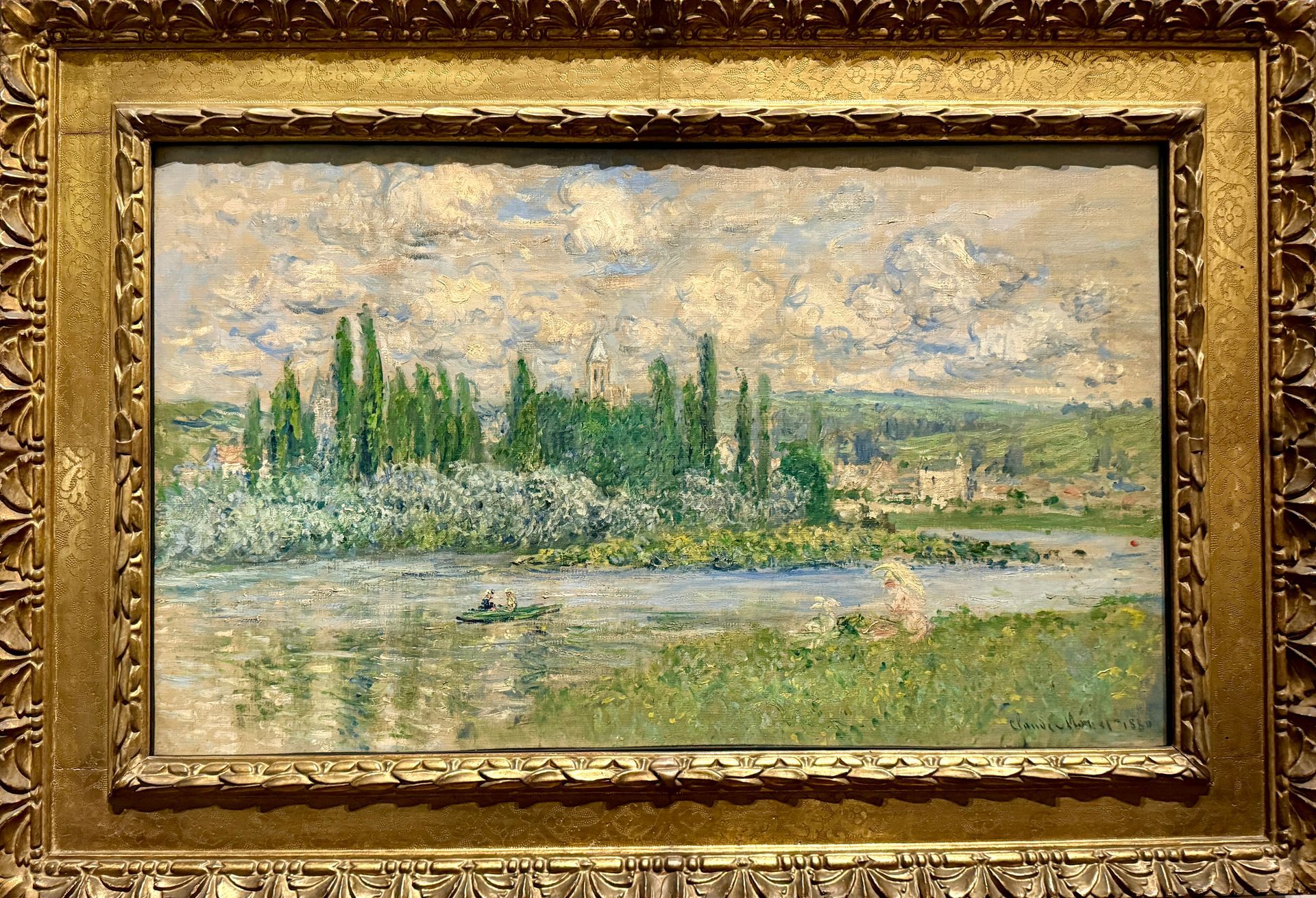
In the “View of Vétheuil” (above) everything is active – the clouds, the wind in the trees, and the rippled water. Clouds and water always provide an excuse for expressive, loose painting. But, Monet applies the same looseness to solid forms, unifying the painting. The almost incidental architecture and skiff remind me of classical Chinese painting where minuscule people, buildings or bridges are nestled into the landscape.
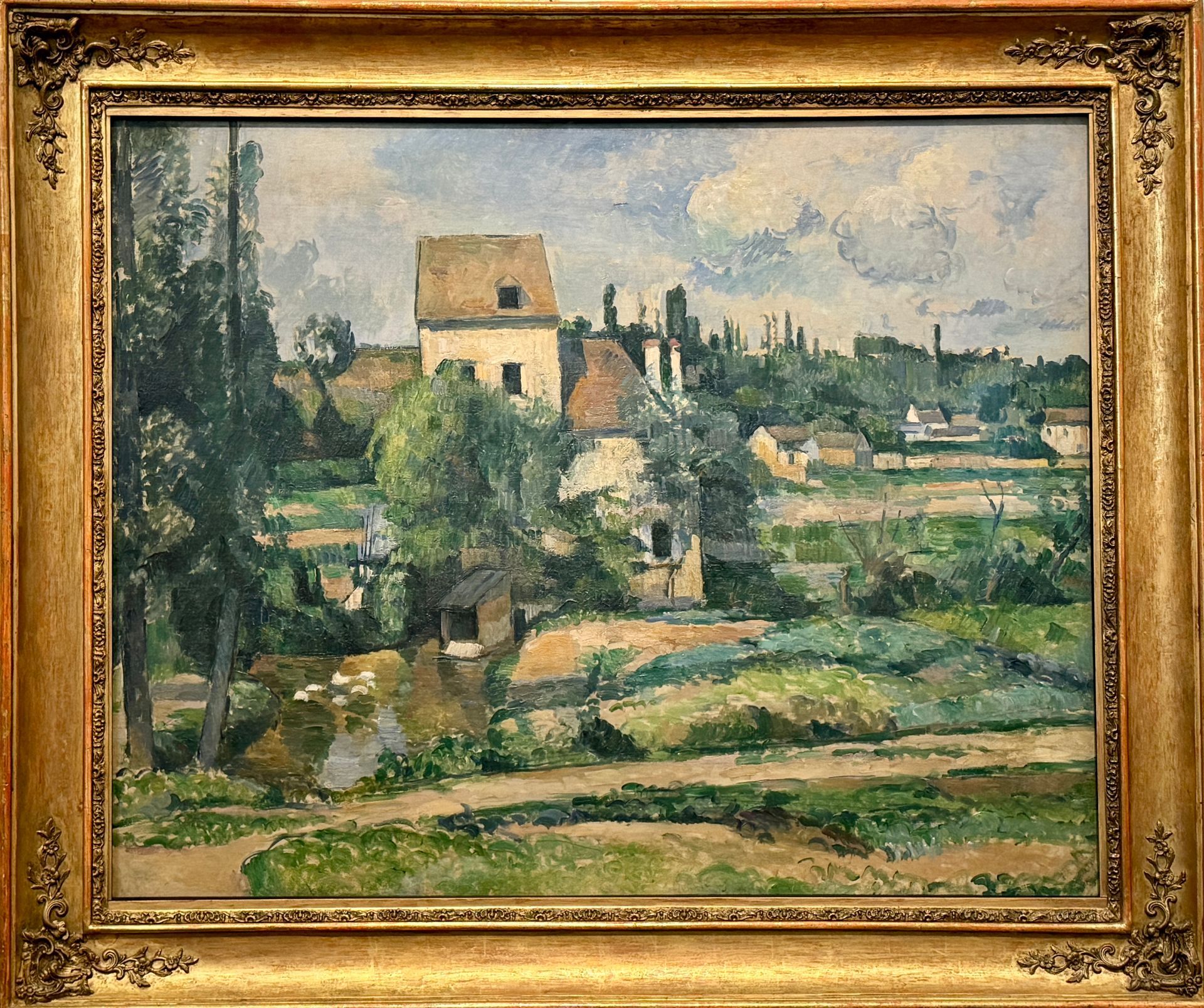
In this painting, Cézanne proves that everyday settings that we easily overlook can contain inspirational beauty. Architecture and a domesticated version of nature would have cohabitated here for centuries by the time this was painted. The picture gives us a wealth of greens – warms and cools, saturated and muted. The ochres, yellows and neutral reds add a contrast, making the greens even more green!
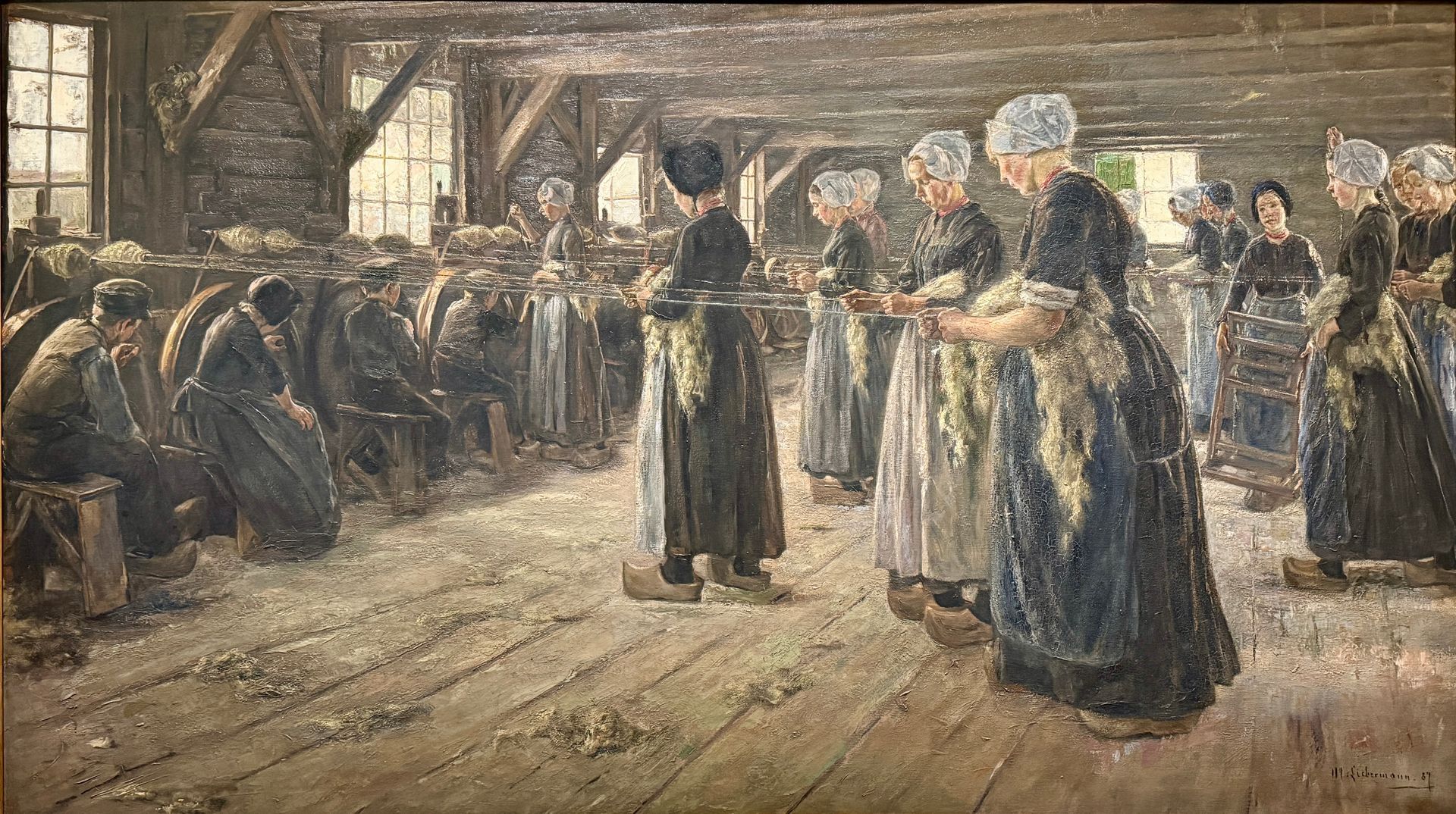
This panoramic painting seemed like an outlier in the exhibit. I wanted to include it in this post though, because it is so interesting: children winding flax onto spindles, women spaced throughout the shed, each with a bundle of flax under her arm, spinning the thread. The regular rhythm of the floorboards and ceiling joists are restated by the rhythm of the standing women. All of it communicates the repetition and the monotony of the workday. The cool, blanched colors express the dour sadness of this work scene.
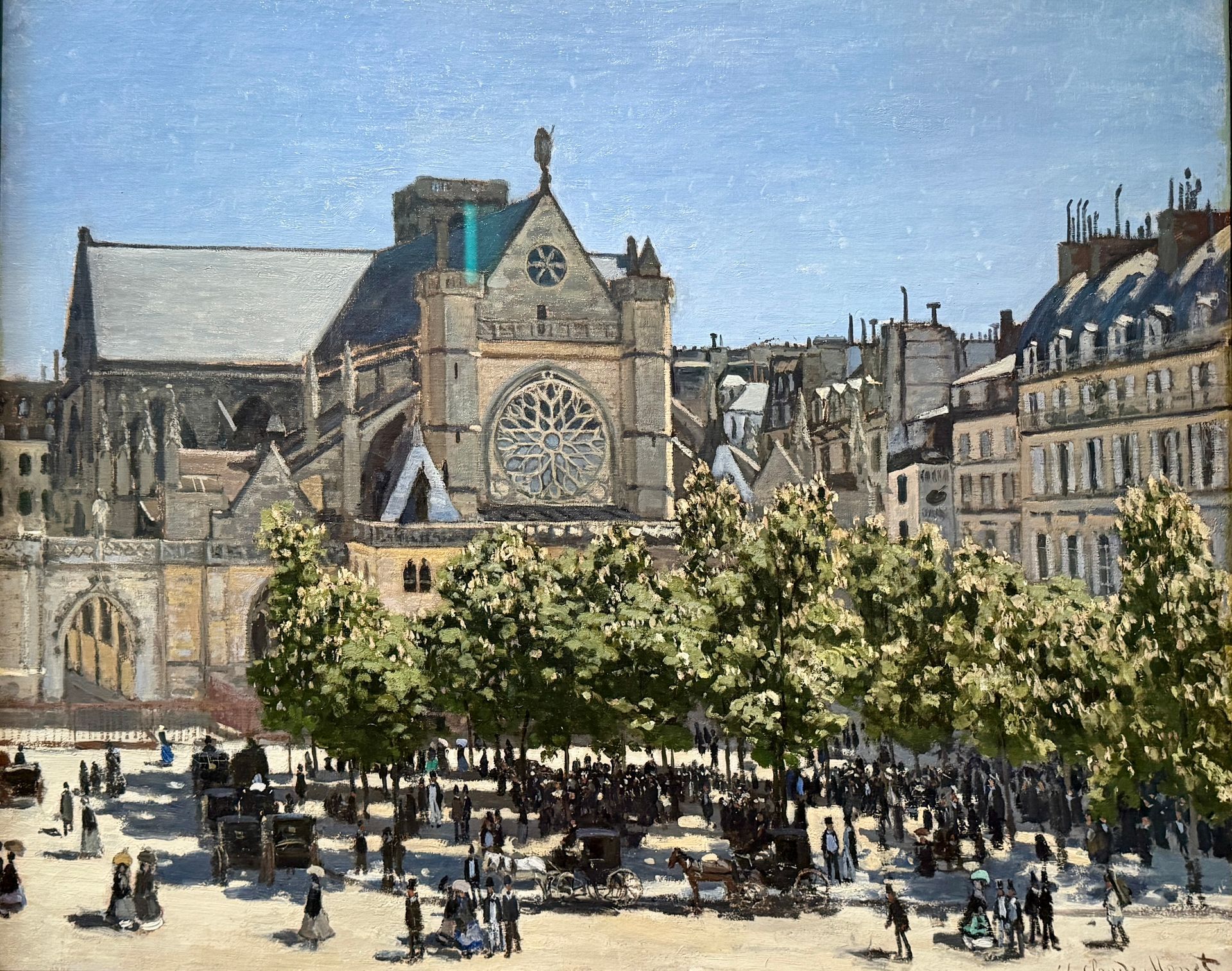
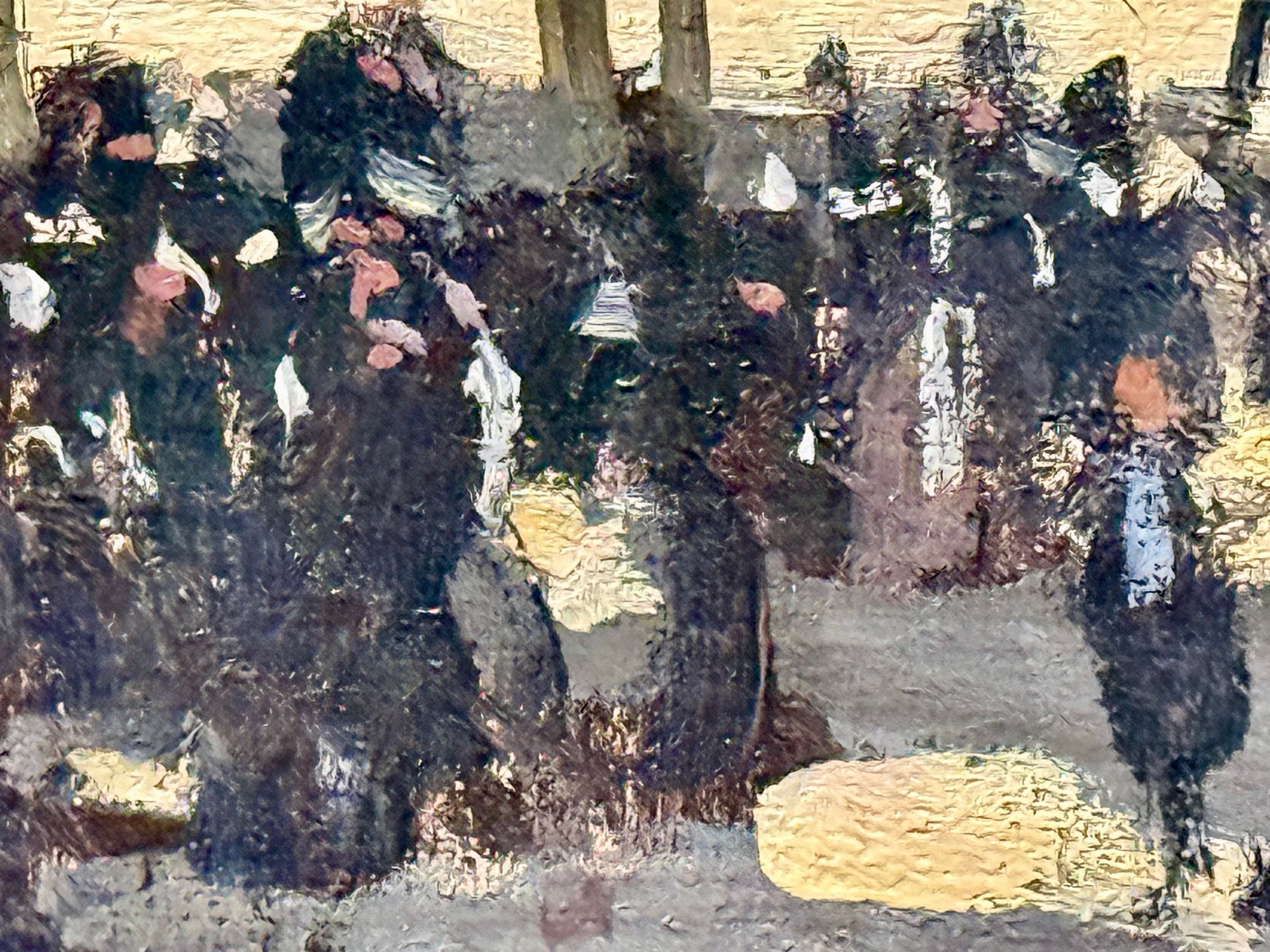
This early Monet is literal and flattened – very different than the waterlily-and-haystack Monet that we know. I included a close-up shot of the people milling around in the square. Monet renders them very convincingly with brief, shorthand strokes of paint.
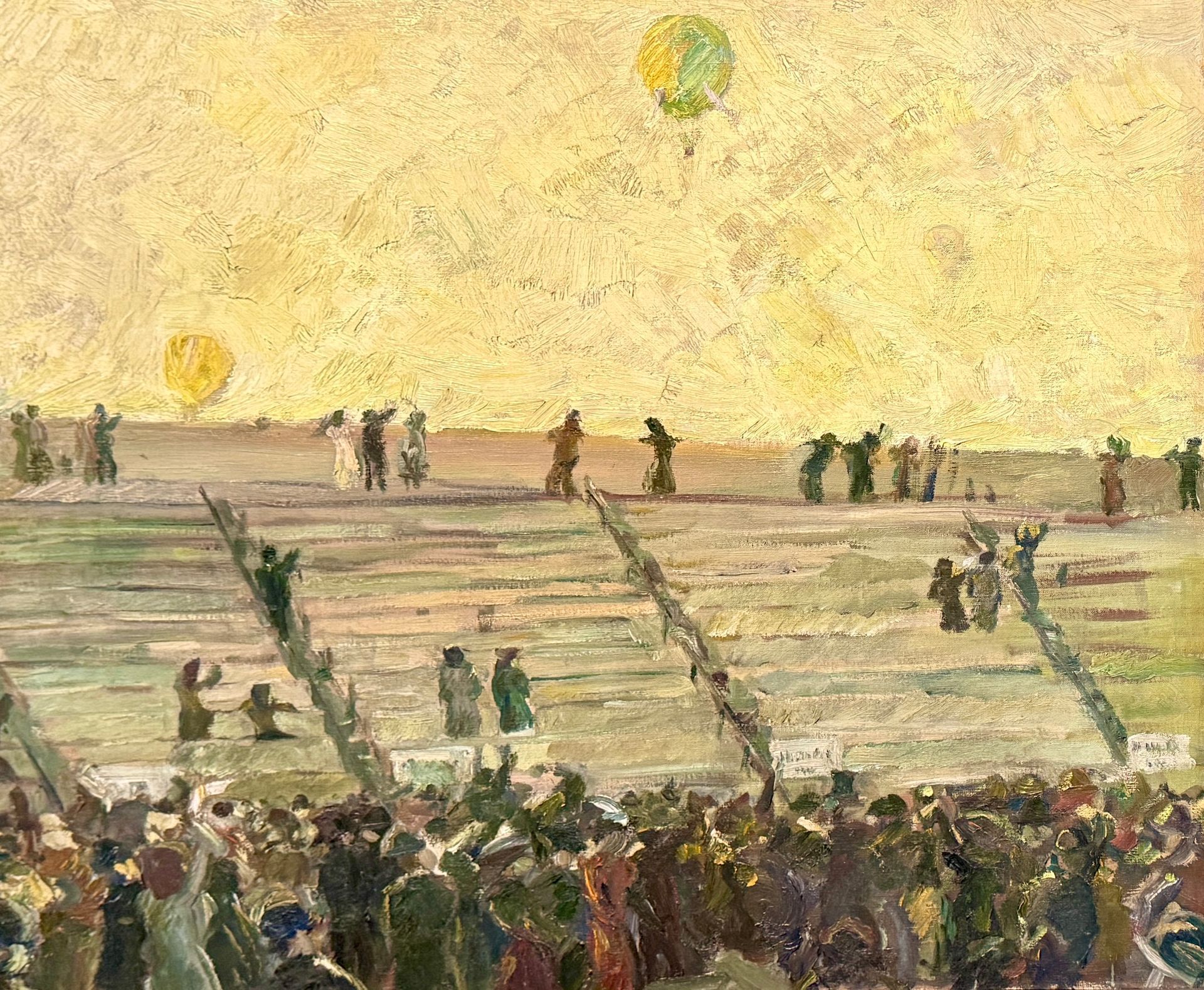
This early Beckmann captures a crowd watching a balloon race in this swiftly done painting, which is divided into three bands: sky, the middle terraced area, and a ground-level throng of balloon-watchers. The contrast between the heavy browns and greens at the bottom of the picture and the glowing gold-yellow sky, accentuate the weightlessness of the balloons. The painting has a snapshot feel that makes it feel journalistic.
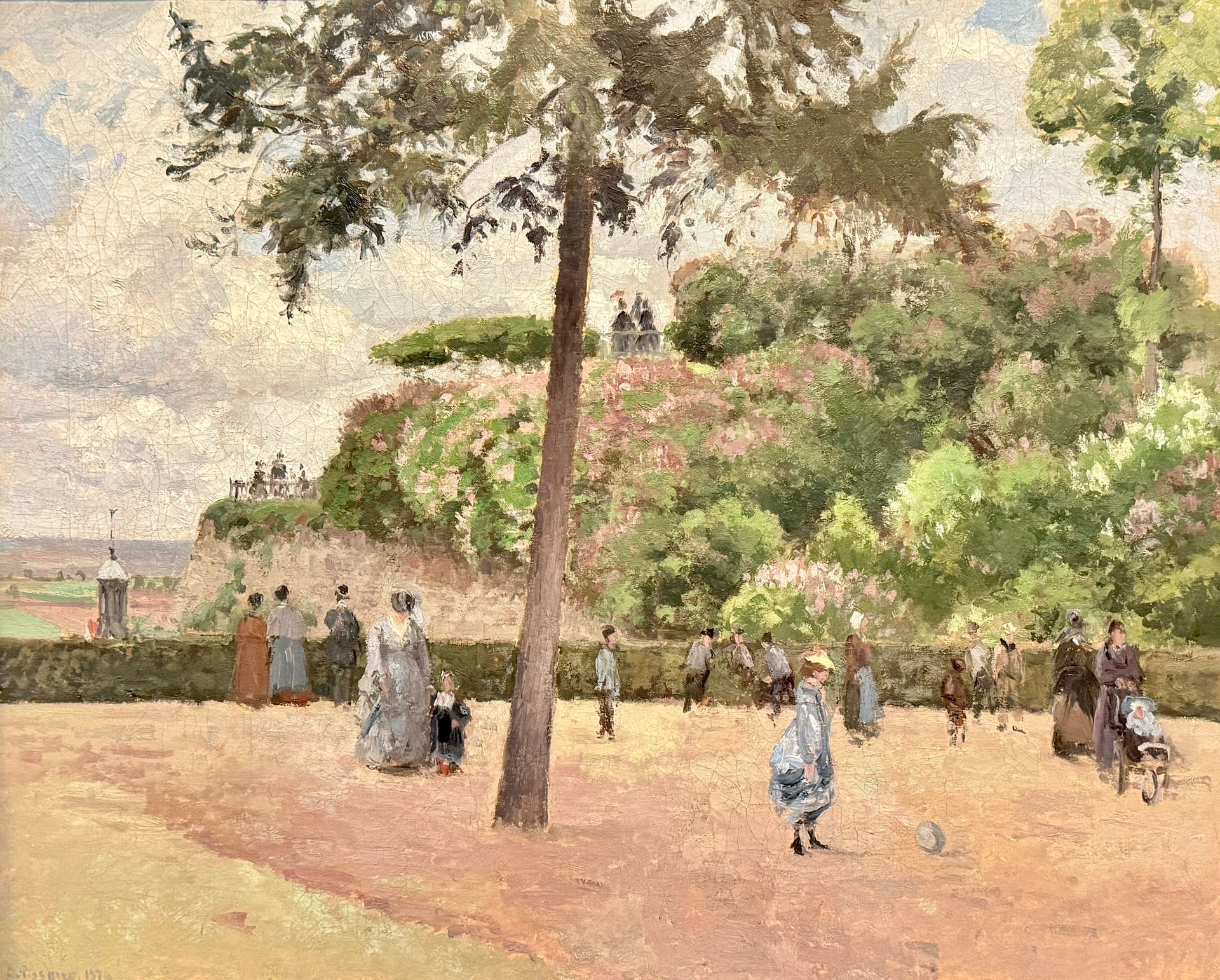
I like the filtered, restrained colors in this painting. The composition is interesting with most of the large shapes and lines fitting into classical ratios, but Pissarro pushes the dividing line of the tree toward the center of the painting - adding an unsettling mood. The horizontal wall counters the strong vertical of the tree. The grid layout of the composition creates a mood of quiet stability. The space between the nearest figure, the two people on the high ridge and the group on the far bluff is very convincing.
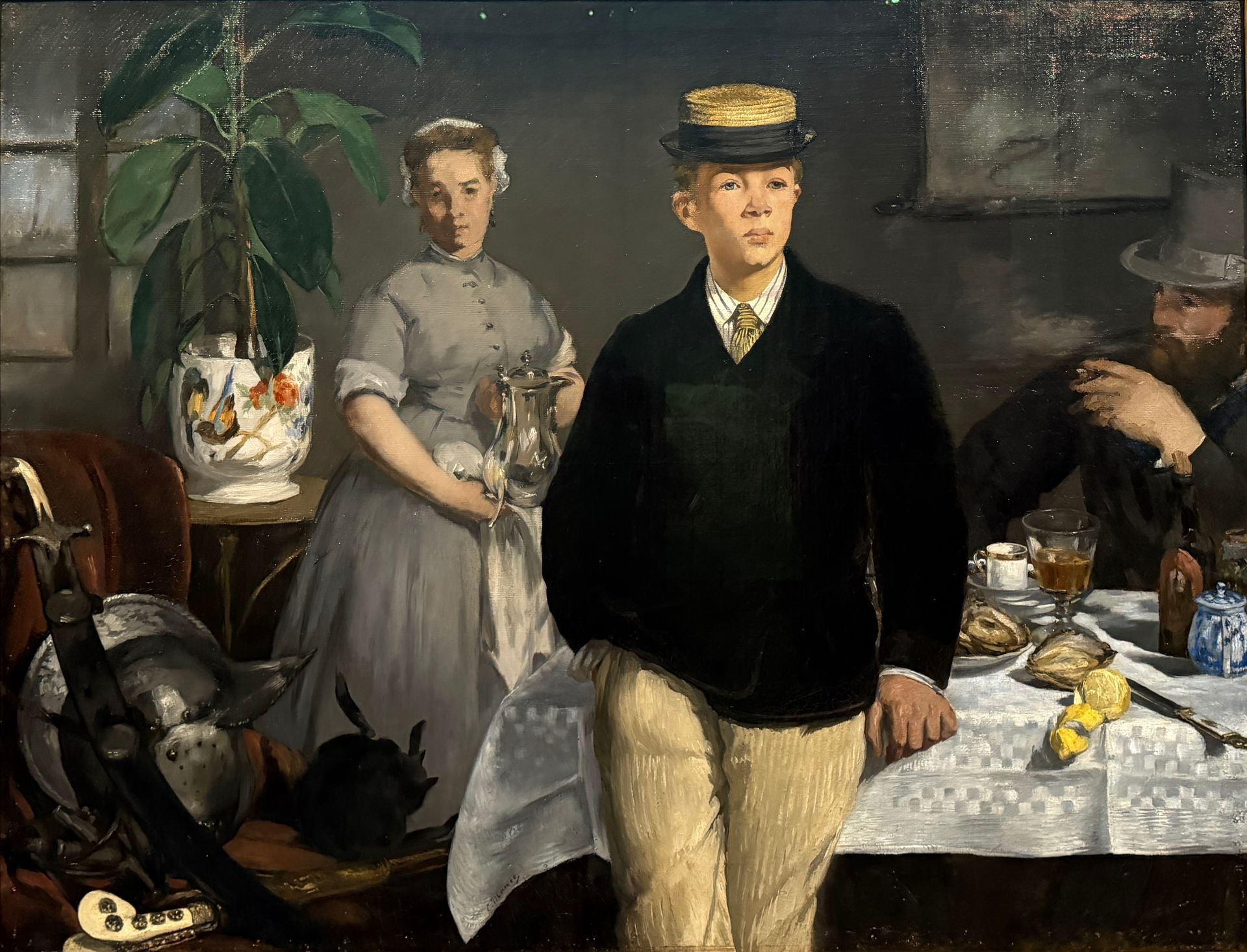
This visual feast, provides plenty to look at – details like the dishes and food, the silver pitcher held by the servant, and the armor, anchoring the bottom left of the picture. However the details do not take away from the central subject – a young man wearing yellow pants, a gold-yellow hat, and a velvety-black jacket. The yellow in the hat, tie, pants, lemon, and vase function as a visual tour guide through the picture. There are many fun details, like the knife protruding off the edge of the table, medieval weaponry, and the cigar smoke - but mostly it’s just a very elegant painting.
This exhibit runs through September 27, 2026.